

New Emerging Employer-led Accountable Care Organizations
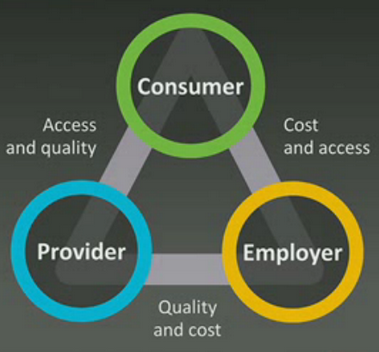
By becoming active participants in the emergence of Accountable Care Organizations, employers can shape ACO priorities and business decisions and thereby secure potential value for their own organizations.
According to a U.S. Census Bureau-sponsored survey on income and program participation, a majority of America’s working-age population receives health insurance through their employers. While the Accountable Care Organization (ACO) movement has primarily involved a collaboration between health care delivery systems and health plans, employers would benefit in both cost savings and employee satisfaction by engaging more directly in accountable care efforts.
The accountable care landscape is dynamic, with participants ranging from large health systems to small physician groups, and goals ranging from a genuine transformation of care delivery to a modest bonus payment. Employers seeking to participate in the accountable care movement and influence the evolution of the health care marketplace must align their organization’s needs and interests with an accountable care model with similar priorities. Just as there is not just one ACO model, there is not just one way that an employer can be involved in accountable care.
By becoming active participants in the emergence of Accountable Care Organizations, employers can shape ACO priorities and business decisions and thereby secure potential value for their own organizations. But how does an employer participate in this new, constantly evolving ACO marketplace? An article by Isabelle Wang and Michael Maniccia in Benefits Quarterly examined the employer role in the accountable care marketplace and the authors suggest three alignment options employers can adopt to drive ACO model development.
- Embedded Value – In this alignment option, an employer selects a health plan that is engaged in accountable care. The employer does not directly engage in accountable care decisions, but by selecting some form of an accountable care health plan they show interest in the embedded value of an ACO.
- Favorable Product – The second option allows the employer to be slightly more involved in health plan decisions and requires a more visible commitment to the ACO model. The employer and health plan can work to develop a product that aligns priorities around a product that channels members to ACO providers—the goal being to drive consumers to access health services from a more efficient and higher quality provider.
- Full Collaboration – The third and most involved option allows employers to have a more significant influence in a market. Rather than engage with an already established ACO model, the employer takes a leading role in the development, design, and initiation of the ACO. Thus, the employer becomes a full risk and full reward partner.
Individual employers will have to decide which level of engagement they would like to pursue depending on their specific circumstances and goals. In some markets, ACO presence is limited and a full collaboration approach may not be economically feasible or favorable. In this case, an employer may be limited to the embedded value approach. Until Accountable Care Organizations become more prevalent, it is likely that only larger and more geographically concentrated employers will be able to engage in the full collaboration approach and capitalize on their leverage to drive ACO development.
Employers can have varying levels of influence on ACO development. In each case, this is a win-win situation. Ultimately, directing members to more efficient health providers will benefit the bottom lines of both employers and Accountable Care Organizations. As employers attempt to control their rising health care expenditures, Accountable Care Organizations will be accountable to deliver better care at lower costs. Employer participation in accountable care has the potential to help drive ACO development in a direction that will more fully meet the needs of the employer community. With employers, health plans and provider systems all aligning priorities to achieve similar results, delivery systems will become more efficient and affordable.
Read the original article written by Tianna Tu: ACO Consulting, Health Intelligence.
Read the article by Isabelle Wang and Michael Maniccia: Benefits Quarterly.
Contact Us
Learn how Patriot Labs helps health-focused technology companies and healthcare organizations succeed. Contact us: email | phone 202.643.4766.
About Patriot Labs
Patriot Labs is committed to helping both innovative solution providers and enterprise customers succeed. For large enterprises, we dramatically accelerate delivery of industry innovations, nextgen technologies and transformational business solutions. For technology providers, we accelerate business development efforts, from market vision – to solution demonstration – to large customer acquisition.
Patriot Labs counts as clients many leading corporate enterprises, government agencies, research organizations, and emerging technology companies. Our technology development and deployment collaborations support a wide range of industries, including: education, energy, environment, financial services, healthcare, manufacturing, pharma, transportation, and many more.
Comments