

OPEN
INDUSTRY CALL-FOR-INNOVATION

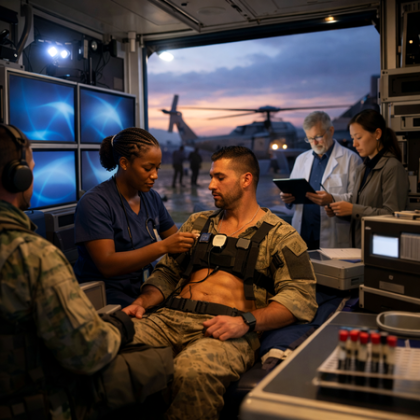
Medical Devices (wearable and diagnostic) for Federal Government Agencies
Background: Federal government agencies are experiencing a growing need for advanced medical device informatics to support wearable and diagnostic medical devices. The integration of informatics with medical devices enables real-time health monitoring, data-driven decision making, and improved patient outcomes. This demand is driven by the increasing adoption of telemedicine, remote patient care, and the need for rapid diagnostics in diverse operational environments.
Challenges: Major challenges include ensuring secure, interoperable data exchange between devices and health information systems, as well as maintaining device reliability in austere or high-tempo settings. Agencies must also address data privacy, cybersecurity, and compliance with regulatory standards while scaling solutions to large, distributed populations. Overcoming these obstacles is essential to fully leverage the potential of medical device informatics for mission-critical healthcare delivery.
Needs: Patriot Labs is interested in innovative solutions that seamlessly integrate informatics with wearable and diagnostic medical devices to enhance health monitoring and clinical decision support for federal government agencies. Such solutions should enable secure, real-time data collection and analytics, supporting both individual and population-level health management. The need is driven by operational requirements for timely, actionable insights and improved healthcare outcomes in both routine and emergency scenarios.
Requirements: Preferred technical solutions may employ or include secure wireless connectivity, standards-based data interoperability, and robust analytics platforms tailored for wearable and diagnostic medical devices. Solutions should support integration with existing government health IT infrastructure, comply with federal cybersecurity and privacy regulations, and provide scalable deployment options. Automated data aggregation, anomaly detection, and remote device management capabilities are highly desirable.
Characteristics: Solutions should provide or enable continuous, accurate physiological monitoring, seamless data transmission, and user-friendly interfaces for both clinicians and patients. Devices must be durable, reliable, and capable of operating in diverse environments, including field and remote locations. Real-time alerts, customizable reporting, and adaptive analytics are key functional attributes.
Benefits: Benefits sought include improved operational readiness through early detection of health issues, enhanced situational awareness for medical personnel, and streamlined care coordination across agencies. Solutions are expected to reduce response times, optimize resource allocation, and support data-driven policy and clinical decisions. Demonstrable improvements in patient safety, health outcomes, and mission effectiveness are critical.
Approaches: Approaches could include the development of modular, interoperable device platforms leveraging open standards, integration of AI-driven analytics for predictive health insights, and deployment of secure cloud-based data management systems. Pilot programs and phased rollouts may be used to validate performance and scalability in operational environments. Collaboration with end-users and stakeholders will ensure solutions meet mission-specific requirements.
Special Consideration: Special consideration given to solutions that include or enable advanced AI/ML-driven predictive analytics, adaptive device behavior, and autonomous health monitoring capabilities that can operate independently in disconnected or contested environments.
Publish Date: 8/9/2026
Capability Focus Area: Medical Devices (wearable and diagnostic)
Announcement Type: CFI
Applicable Agencies: federal government agencies
>> Source URL